The Dig · Vatican
A chemical soak revived Cicero’s lost republic
A nineteenth-century chemical trick peeled back a seventh-century Augustine manuscript to reveal fragments of Cicero’s De re publica, a text scholars had already given up for lost.
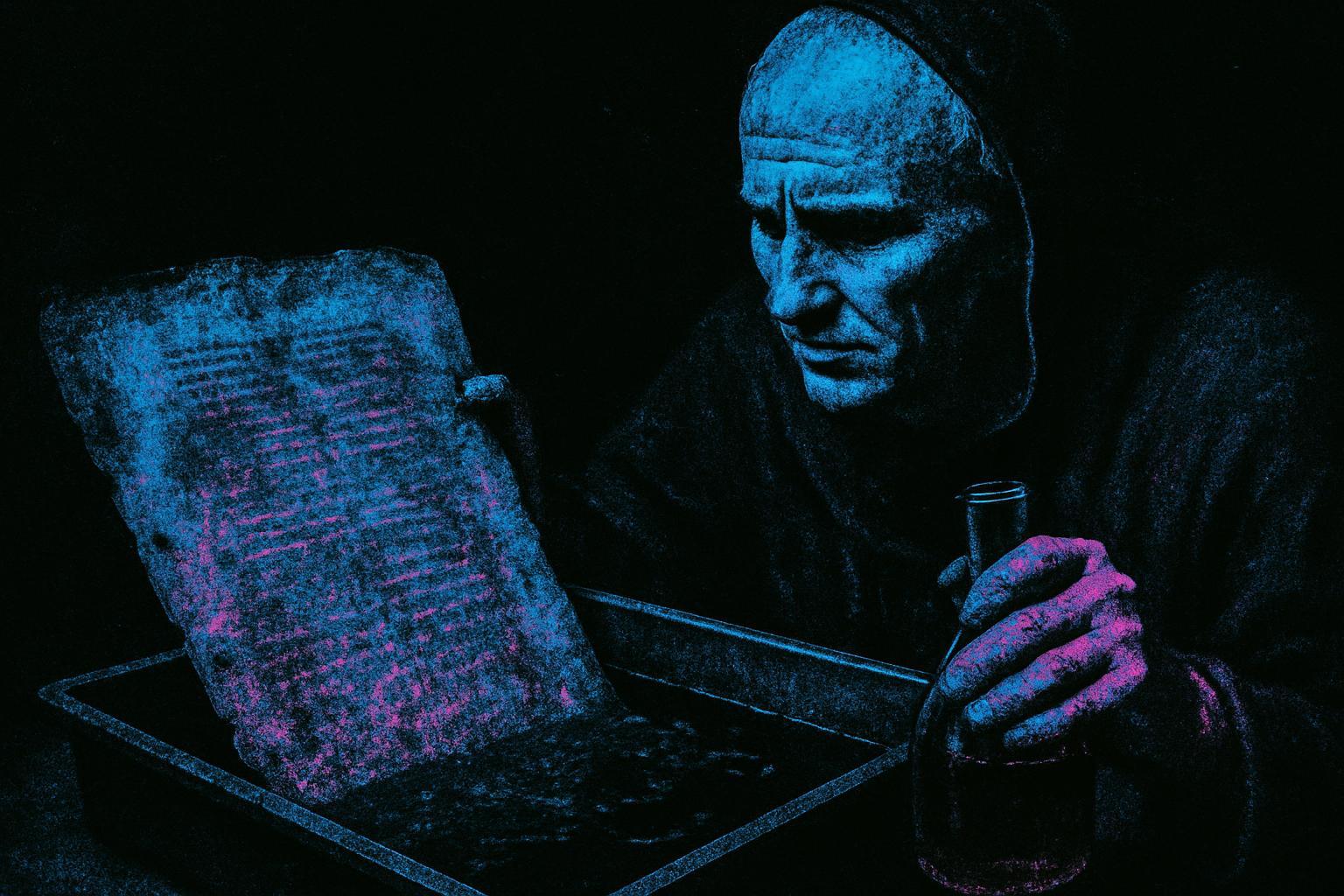
Vat.lat.5757 is a 7th-century codex holding Augustine’s commentary on the Psalms, written over erased 4th-century text of Cicero’s De re publica. Angelo Mai, prefect of the Vatican Library, spotted traces of the older hand beneath the newer one in 1819 and used gallic acid to bring up the faded ink. The DigiVatLib IIIF manifest now lets anyone check the page images against his transcription.
The recovery holds. Paleographers have matched the underwriting’s script to known 4th-century Ciceronian hands, and the recovered lines line up with fragments quoted by Macrobius and Augustine himself elsewhere. Multispectral imaging done this century confirms what Mai saw with acid and a steady hand; the text is there, not invented.
It is not a clean win. Mai’s reagent scarred some folios, and later readers complain of patches turned near illegible, a chemical cost nobody asked Cicero’s permission for. What survives is roughly a third of the original six books, with whole sections still missing and some lines reconstructed by conjecture rather than sight.
The find matters less for plot than for practice: parchment was expensive, so monks scraped and reused what Rome no longer valued. A pagan treatise on government ended up as scrap paper for psalm commentary, saved by accident rather than reverence. Read the manifest yourself before trusting anyone’s paraphrase, including ours.
Source: The Dig / the Vatican archive source